Economics Association of Malawi (Ecama) says fiscal discipline and foreign exchange reforms are key to the ongoing negotiations between the Malawi Government and the International Monetary Fund (IMF).
Ecama has since warned that some measures required to restore stability could impose short-term costs on businesses and households.

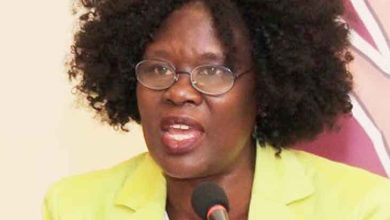
Reacting to the IMF mission currently holding talks with Malawi’s fiscal and monetary authorities from September 21 to October 3, Ecama president Bertha Bangara-Chikadza said on Friday that the main challenge will be reconciling macroeconomic adjustment with institutional reforms needed to address fiscal and monetary imbalances.
An IMF team led by Justin Tyson is in Malawi for policy negotiations towards a possible Extended Credit Facility (ECF).
Malawi’s last four-year ECF valued at $175 million (about K306 billion), which was approved on November 14 2023, collapsed in May 2025 after running for 18 months without reviews.
Bangara-Chikadza, an economics lecturer at University of Malawi, identified reducing the fiscal deficit, maintaining expenditure discipline, improving forex management and exchangerate flexibility and addressing parallel-market distortions among the sticky issues.
She said that Malawi needs to maintain a tight fiscal stance, prioritise expenditure control, curb domestic borrowing and strengthen accountability in parastatals and State-owned enterprises.
“Contractionary fiscal policy, for example, could help the government reduce its deficit, but adversely affect businesses that depend heavily on public procurement,” said Bangara-Chikadza.
Economist Dalitso Kubalasa also identified forex, fiscal discipline and public debt as the three major pressure points.
“Foreign exchange is the biggest one, for me,” he said, arguing that the difference between official and parallel-market exchange rates requires a credible policy response.
Kubalasa said fiscal discipline would be particularly important following the premature end of Malawi’s previous ECF.
He said reforms could include tighter controls on government borrowing and accumulation of arrears, alongside cost-reflective fuel and electricity pricing accompanied by targeted protection for vulnerable households.
Kubalasa agreed that the significance of an agreement extends beyond direct IMF financing.
“The IMF money itself is of course quite small, but the signalling effect means everything,” he said.
Malawi is currently facing severe forex squeeze amid rising public debt hovering around K24 trillion, about 91 percent of the gross domestic product.